Louvres in the Loop
Trilux LightingOtto Fuchs
Louvres in the Loop
Trilux Lighting
Otto Fuchs
A ground-breaking process which turns the aluminium in louvres into housings for new luminaires has won both a Build Back Better PLATINUM and GREEN Award in the 2026 lighting category.
A ground-breaking process which turns the aluminium in louvres into housings for new luminaires has won both a Build Back Better PLATINUM and GREEN Award in the 2026 lighting category.
For decades, optical systems for office and industry lighting were typically specular aluminium louvres or reflectors to direct and shield light from fluorescent lamps.
Many of them are still in use today but are being replaced by LED luminaires with high efficiency and optical systems tailored to LEDs.
So what is the most responsible way to handle those old aluminium louvres?
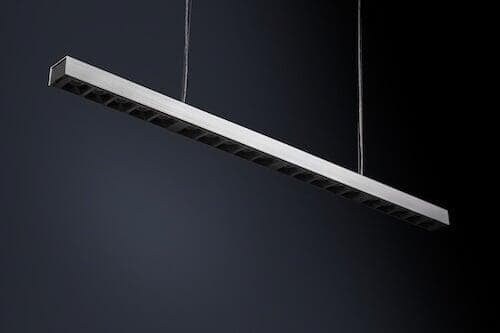
In a joint research project, Trilux and metal working specialist Otto Fuchs have found a way to recycle aluminium scrap into luminaire housings without the need to remelt the material.
The novel process, which could be called ‘the shortest possible recycling route for aluminium’, saves energy and thus CO2 emissions compared to conventional aluminium recycling or production of virgin aluminium.
Running from January 2024 to October 2026, the research project has produced luminaire prototypes demonstrating the feasibility.
Part of the aluminium comes from old specular louvres or reflectors that Trilux collects from customers. Otto Fuchs contributes aluminium chips that occur as scrap in machining processes in their production facility known as ‘pre-consumer material’.
The specular louvres are shredded, and steel fasteners are removed. The aluminium chips are cleaned. Both materials are mixed in a defined ratio and compacted into briquettes.
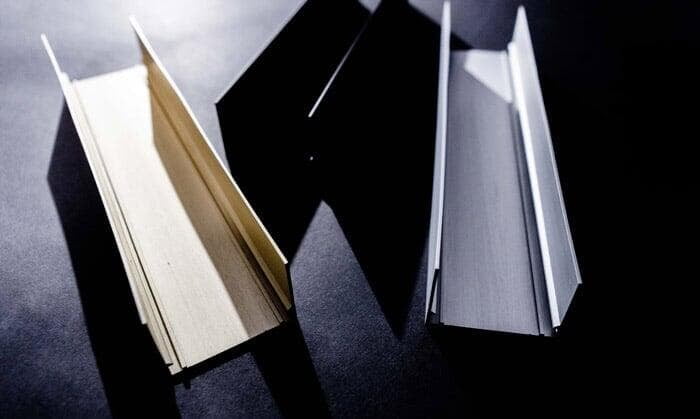
Subsequently, the briquettes are heated to extrusion temperature and pressed through a die. This die gives the profile its final contour. Under pressure and temperature, the aluminium chips form a bond.
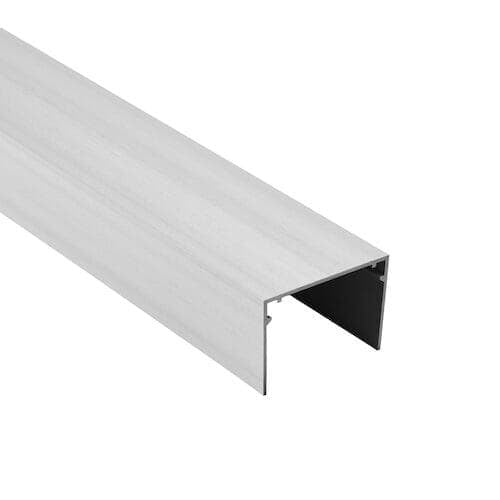
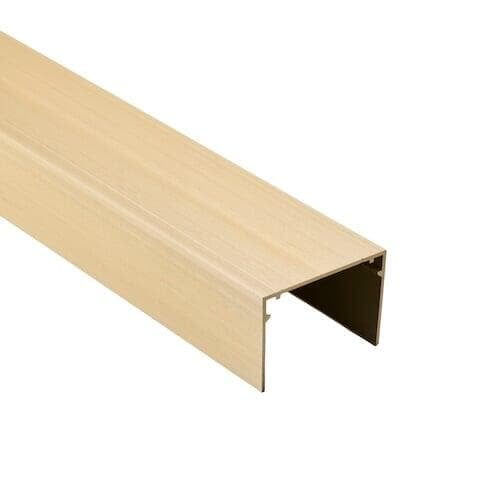
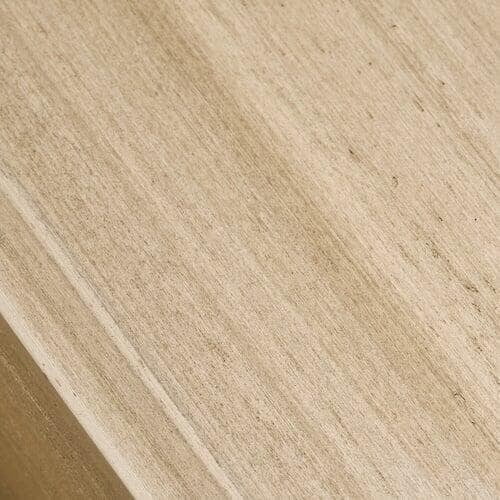
Through the new recycling process with subsequent anodising, an aluminium profile with a finely structured surface is created. The unique aesthetics of the surface shows that it is a material with a special history.
The material for extrusion has a very low CO2 footprint, which the team estimated in the research project to be only about 0,14 kg CO2-eq. per kg of the aluminium briquette.
For comparison: Even ‘low-carbon’ aluminium blocks come with 4 kg CO2-eq. per kg, and world-average primary aluminium has 16 kg CO2-eq. per kg.
The process, dubbed ‘louvres in the loop’, can use the material to produce housings for bespoke luminaires, and the team is evaluating opportunities to create a small luminaire portfolio as a series solution as well as furniture.